Reading time:
Bill of Lading: what it is and how it works
A Bill of Lading (BL), or in Spanish Conocimiento de Embarque, is a very commonly used legal document in international trade. In short, it is a contract that binds the exporter to the carrier and to the recipient of the goods.

Author
Laura Díaz | Sr. Operations Manager
What is a bill of lading?
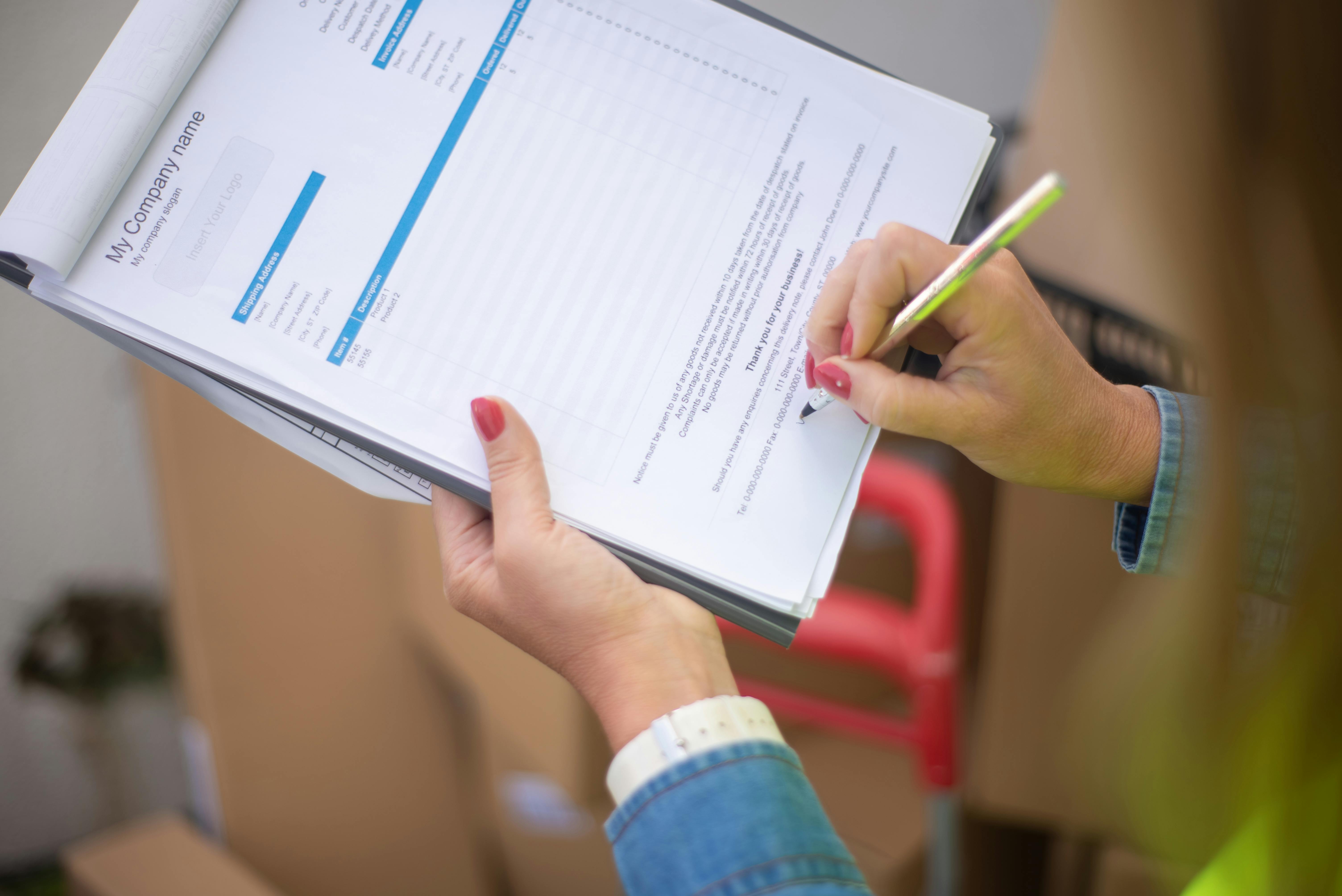
A Bill of Lading (BL), or in Spanish Conocimiento de Embarque, is a legal document widely used in international trade. In short, it is a contract that links the exporter with the carrier and with the receiver of the goods.
It details information about the cargo such as quantity, type, and destination. The Bill of Lading is sent together with the exported product so it can be received by the consignee and varies according to the type of trade. It is more common to use the term as such only when dealing with exports by sea.
What is the purpose of the BL?
The Bill of Lading is a legal document that is issued and signed with the intention of protecting the trade relationship between the parties: shipper (carrier), consignee (consignee), and notify (representative of the consignee or other parties who must be notified).
It is the second step in this chain, since when starting an export relationship and selling a good to an international buyer, what is called a Purchase Order is sent first (or Purchase Order in English). The Purchase Order is the order for the goods, where it is detailed what is to be purchased and what the exporter agreed to send.
The BL is, then, proof that that shipment was carried out correctly. It is issued to declare the goods, for the shipping line to certify that they were delivered to it and that the weight matches what was agreed. It is also used to describe the terms and conditions established between exporter, carrier, and receiver.
The Bill of Lading also fulfills other functions:
It authorizes the goods to be transported. In case of theft, the BL acts as a security measure, support for the insurer, showing that what was being loaded had already been declared. It works as evidence of the shipment.
The BL serves as a reference to know exactly what route the cargo took.
It functions as a title of ownership for the goods. The consignee shown on the Bill of Lading is the one who must present it for the shipping line to release the goods.
It details the freight cost and indicates the type of service contracted.
It is used as documentary evidence for financing relationships. In factoring relationships, the BL is requested by the financial institution as proof that the goods were shipped.
Who completes the information on a Bill of Lading?
There are necessary data about the cargo that the exporter must provide in advance to facilitate the accuracy of the information. It is also very common for intermediaries to be used between the shipping line and the exporter to enter the BL data.
This intermediary is the figure of the Freight Forwarder or cargo agent in Spanish, and is the one who works in contact with the shipping line instead of the exporter himself.
The cargo agent is responsible for buying space on trucks and ships, receiving the information required by the exporter, completing the fields of the Bill of Lading, and sending the document to the exporter so that they can verify and confirm that the loaded information is correct. In case it is necessary to make changes to the document (after the documentary cutoff, that is, the time allotted to send all the documentation), the cost of these changes is borne by the exporter or the cargo agent.
What information should it include?
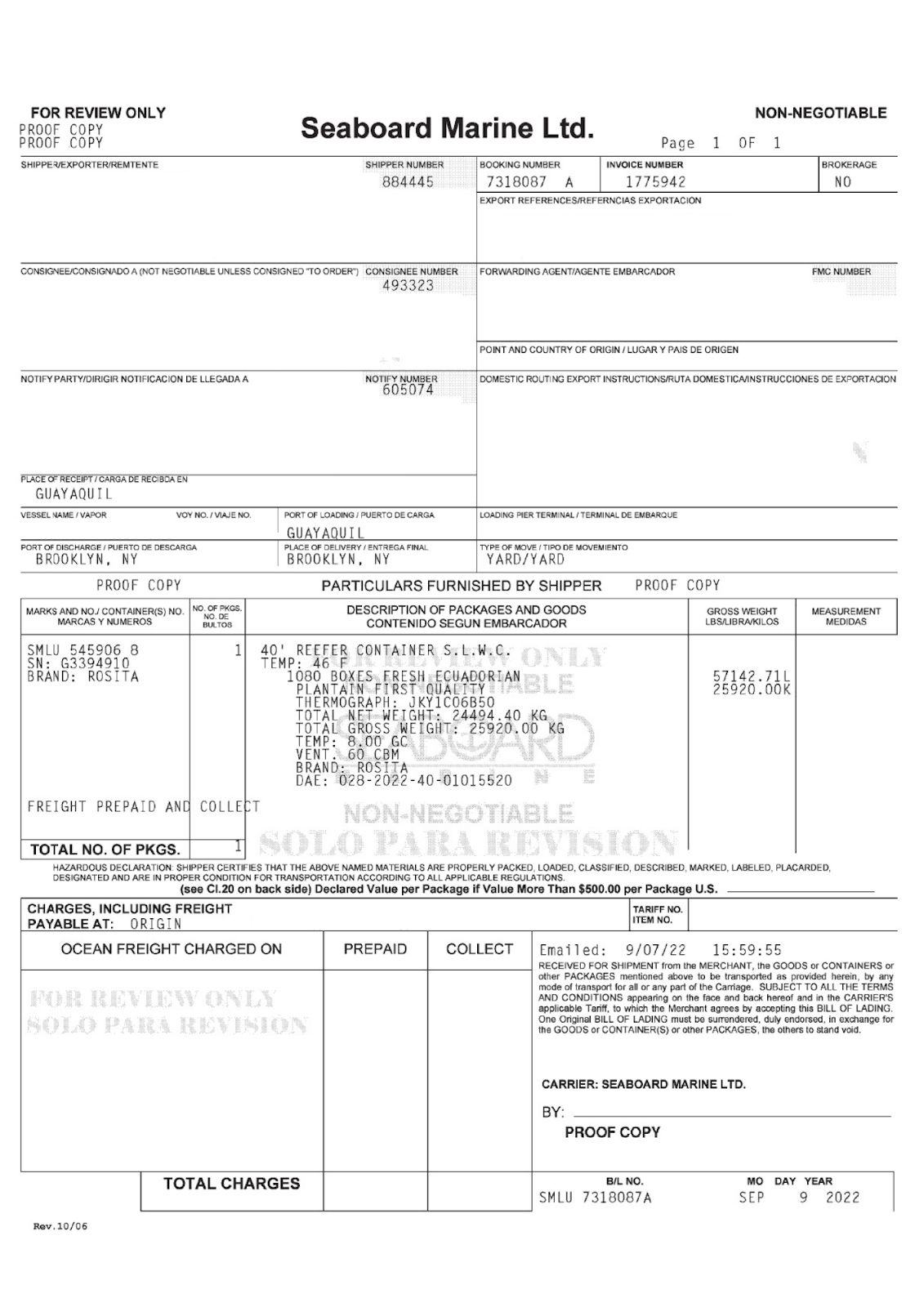
It must reflect information about the three parties involved: shipper, consignee, and notify. It must include details about the place where the goods are received, the destination agent, the unloading port, and the vessel on which the cargo is transported, among other things.
The information must be complete, with all fields in the form filled out with exact information and no room for doubt, since this can lead to disputes between exporter and importer, resulting in payment problems or other legal issues.
It is also important that it includes the description of the goods:
Dimensions in cubic meters
Type and number of containers
Customs seal
Quantity and class of goods
Number of packages
Gross weight, weight per unit
Value of the cargo (only in the case of air and land transport)
Materials and condition of the goods.
Whether the goods are classified as dangerous or not
Type of packaging used
Other notes about the cargo
It details information about the Bill of Lading itself, such as the number, date, and place of issue, and the number of originals issued. Details of the freight and surcharges and where they are paid must also be added (for example, it may be prepaid at the place of loading or paid at destination).
Bill of Lading format
Types of Bill of Lading
There are different types of Bill of Lading according to different classifications. Several factors are taken into account when categorizing BLs, for example, who issues it, the type of transport, the final purpose of the document, its necessity, the status of the cargo, existing commercial relationships, etc.
These are some of the types of Bill of Lading that exist:
Master BL: this is the Bill of Lading issued by the carrier (the shipping line) to the consignee of the goods at destination or to the freight forwarder named in the document.
House BL: instead of being issued by the carrier, it is issued by the party to whom the Master BL was granted, whether the freight forwarder, the cargo agent, or the exporter of the goods. For a House BL to exist, there must be a Master BL from which it is derived.
Original BL: 3 or more originals are issued, one of which the consignee must present upon arrival at destination so that the goods can be released.
Telex Release: this is a variation of the original BL. It is sufficient for the consignee to present a copy at destination to release the goods; the full original BL is not needed.
Express Release or Sea Waybill: digital format of the Bill of Lading. It has many advantages over paper, such as speed and efficiency of transfer, streamlining the documentation chain, and immediacy, but it is considered less secure. It is easier to access the electronic version of the BL. It is widely used but at the same time very risky, since once it is issued and paid, the cargo is released. It is based on the trust relationship between exporter and buyer.
Switch BL: Replaces the original Bill of Lading, but has the same value as it. It is a second set issued by the shipping line that acts in place of the original if changes have been made and the information needs to be edited.
Uniform BL: is the basic Bill of Lading format, the one that provides all the fields needed to include the greatest amount of necessary information. It also contains the details of the contract between exporter and importer, with data on payment and insurance, for example.
Inland BL (Inland bill of lading): It is used for the movement of goods within the same territory, whether by land or by inland waterways. It can even be used to transport goods to the port before they are exported internationally. Unlike the Bill of Lading explained above, the Inland BL is consigned to a third party (the international carrier) instead of the foreign buyer. The international carrier will be responsible for reviewing the information contained in the document.
Ocean BL (Sea bill of lading): After the Inland BL, if the goods are to be exported internationally by sea, this document is needed. When there are inconsistencies between the cargo information in the Inland BL and the Ocean BL, the latter carries more weight upon arrival at the final destination.
Air Waybill (Air bill of lading): this is used when goods are transported by air. It is the same document for domestic and international transport; it does not vary.
Through BL (Direct bill of lading): this document is more complete than the ones mentioned above. It allows both domestic and international shipments and covers all steps in the chain. This means that the cargo can pass through different types of transport and distribution centers with the same document.
Negotiable BL: is a transport contract transferable to a third party. For this to happen, first the person sending the goods must stamp and sign the negotiable BL, and the carrier must deliver it to the original consignee. Then that person signs the document and delivers it to the new consignee. It can only happen if the bill of lading is clean (that is, if the goods have not suffered damage during transit).
Clean BL (Clean bill of lading): is issued by the carrier declaring that the goods have been received in good condition and without defects, after inspecting them. If the goods are damaged or defective, the Bill of Lading is classified as “claused”.
Claused/Dirty BL (Dirty bill of lading): this document is issued when the goods or part of them suffer some damage, that is, the goods are not being delivered in the condition ordered. This means that the exporter may face difficulties when receiving payment for the products. To prevent a Claused Bill of Lading from being issued, it is better for the exporter to inform the buyer in advance if the order does not meet what was agreed, and for the buyer to accept or not accept the shipment anyway.
Why is it requested in factoring relationships?
In a factoring operation, the purchasing company sends a purchase order to the selling company, which sends the product and issues an invoice with payment terms and a set payment period.
The financial factoring company buys this invoice issued on credit from the selling company or, in other words, buys the right to collect payment associated with that invoice.
When completing the purchase of the invoice, the factoring company generally advances a percentage of the total amount to the seller, which will normally range between 70% and 90% of the value.
For this type of financing, the factoring company typically requests the Bill of Lading accompanied by the invoice, to verify the shipment of the products and the type of agreement between exporter and buyer. It is the supporting documentation requested together with other documents.
Article written by
Laura Díaz | Sr. Operations Manager

Operate between Latin America and the U.S. from a single place.
Global Account · FX · Payments · Credit