Reading time:
Commercial Export Invoice
If you are starting a business relationship with a U.S. company or with any other foreign country, one of the most important documents to support the sale will be the export commercial invoice.

Author
Peter D. Spradling | CEO

Commercial export invoice: what is it and how is it made?
If you are starting a business relationship with a U.S. company or with any other foreign country, one of the most important documents to support the sale will be the export commercial invoice.
What is the export commercial invoice?
The export commercial invoice is a mandatory legal document issued by the exporter to the importer, and it sets out the complete operational process of a sale or disposal of goods.
It includes information such as the type of cargo, product details, importer and exporter data, taxes and duties – the so-called incrementable costs, and the routes the product travels from its point of origin to its final destination: land, sea and/or air transport.
As in any invoice, it also includes information such as the order price, the quantity of goods exchanged and the costs associated with the export.
It also includes the INCOTERM, which basically determines the exact moment when ownership and responsibility are transferred. These are some of the INCOTERMS compatible with factoring:
FOB: Free On Board
CIF: Cost, Insurance & Freight
CPT: Cost Paid To
CIP: Carrier & Insurance Paid To
DPU: Delivered At Place Unloaded
DAP: Delivered At Place
DDP: Delivered Duty Paid
CFR: Cost & Freight
You can learn more about the role of INCOTERMS and their characteristics in this note published by AJR, a Mexican foreign trade company.
What function does the export commercial invoice serve?
Beyond the fact that it is a mandatory document in every export, let's see what exactly this document is for.
You will be asked for it in every customs process. Without this document, you will not be able to complete the customs clearance process.
At the legal level, this is the document that truly validates the transaction of your sale to a customer.
At the operational level in the port, it validates that the goods are ready to be shipped and the details of the transport document: air (Air Waybill), sea (Sea Waybill) or land (Carta Porte).
Once at the destination, the export commercial invoice certifies the type of commercialization of the products.
At the financial and accounting level, it provides an idea of the tariff costs, the transaction currency and the exchange rate used in the document.
The document also reflects the payment term negotiated in the transaction; this information allows the exporter to determine whether the goods will be paid in deferred installments (negotiated credit) or in a single payment subject to the negotiated INCOTERM.
Types of export commercial invoices
It is important that you know there are different types of export commercial invoice. They vary in their nature of use and the conditions of use for each one.
Electronic invoice without commercial value
It is usually used when goods are exported to be used as part of a one-off promotion or a sample. In other words, they will normally not be available for general users to purchase.
Electronic invoice for consignment exports
It is used for exports where it is said that “there is no transfer of ownership,” meaning that the recipient cannot sell them to a third party.
Electronic invoice for the transfer of plastic containers
They are used to market plastic containers with packaging or receptacles used to transport products.
Pro forma invoice or CFDI
It is a document with no accounting value used in customs operations to report the data that the Digital Tax Receipt (CFDI) will contain. It is a kind of pre-invoice that the exporter sends to the importer to inform them of the price details and payment method.
What data do you need to include in an export commercial invoice?
Although we have already seen an approximate idea of the information it includes, let us look in detail at the data that make up this document:
Invoice number
Issue date
Exporter company details (name, address and contact number)
Buyer/importer details
Country of origin
Country of destination
Trip number and transport document details
Loading port
Destination port
Description of the goods (names, brands, quantities, weight, measurements)
Price of each of the goods
Currency and money used
INCOTERMS of the transaction
Signature of the person issuing the invoice
Purchase order attachment
The corresponding waybill
How is the format of an export commercial invoice?
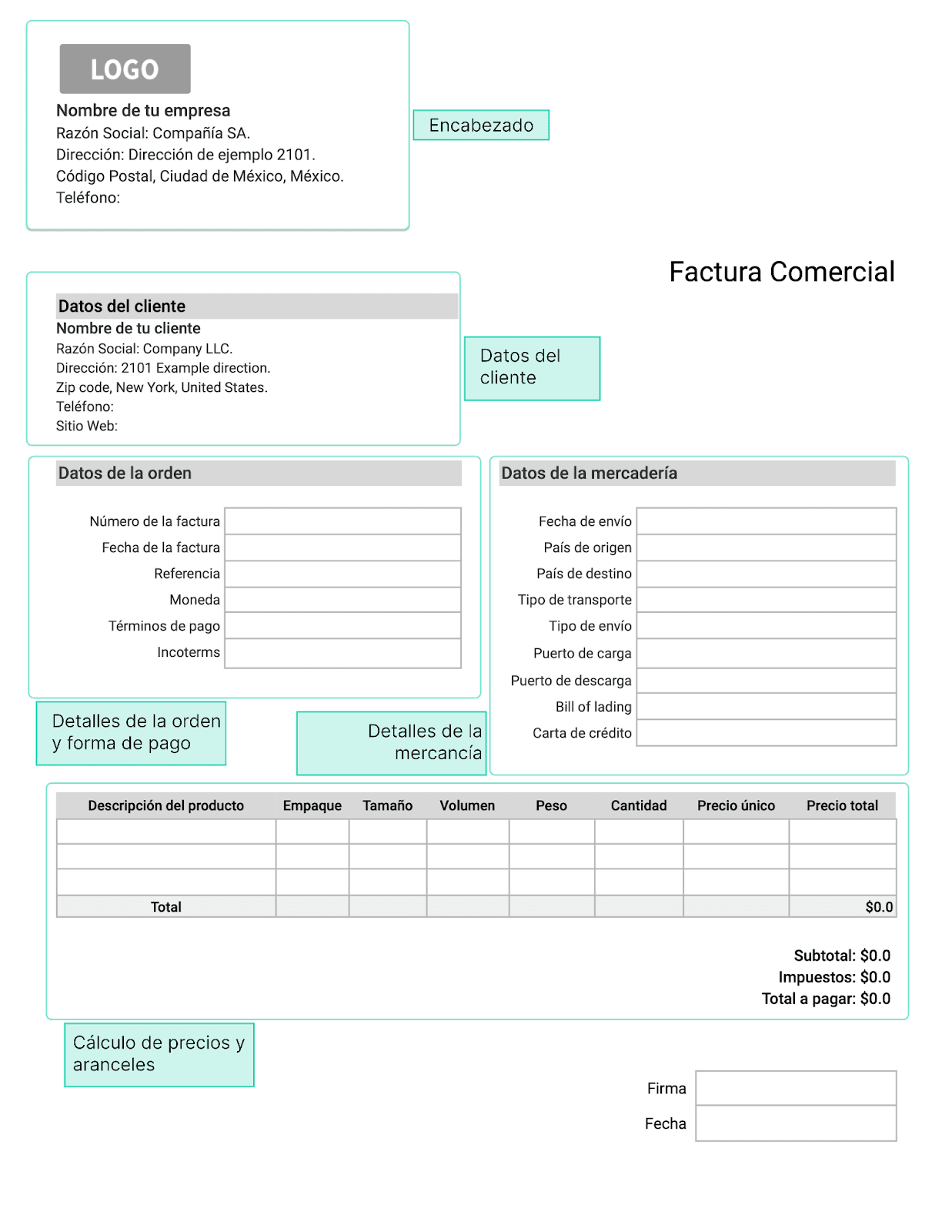
1. Header
Invoices usually have a header that identifies the company. It serves to place the exporter company's details, while also helping the buyer easily identify who the export commercial invoice belongs to. Adding a logo makes recognition even easier.
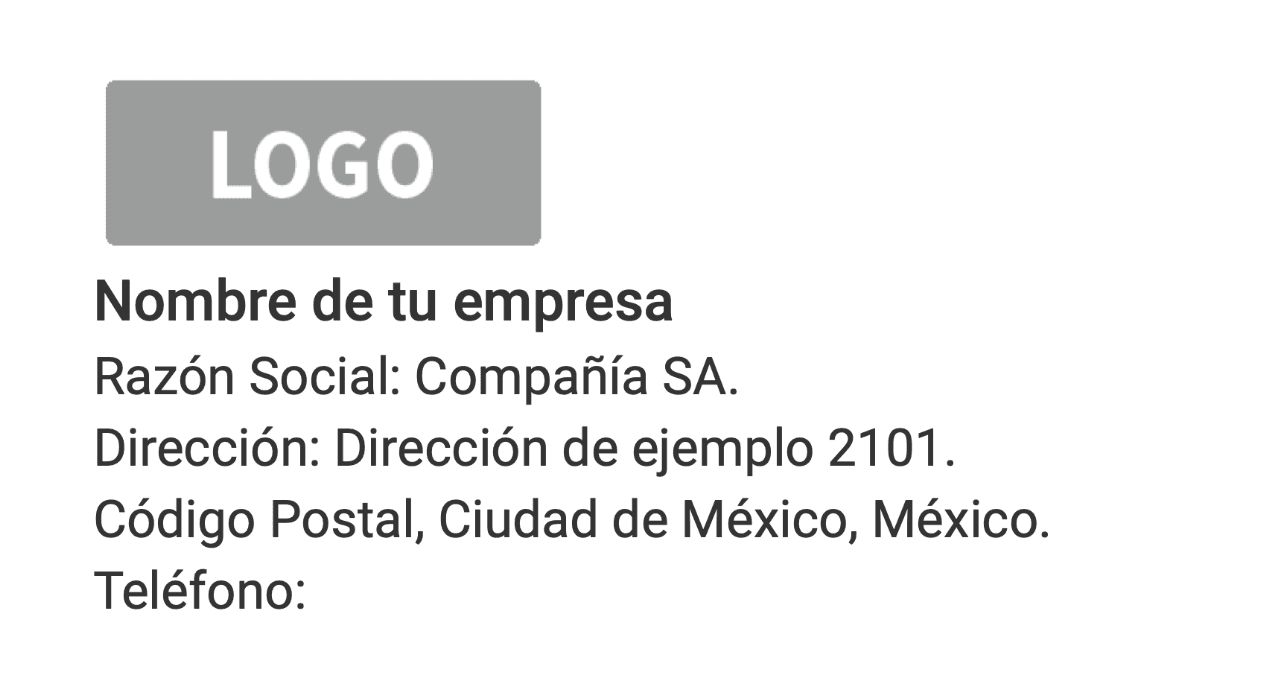
2. Customer data
The buyer's details must also be included in the invoice. In addition to identifying the company by name, legal name and tax ID, it formalizes exactly who the buyer is.
We suggest adding contact details and address, as this helps facilitate communication with either party that may need to get in touch.
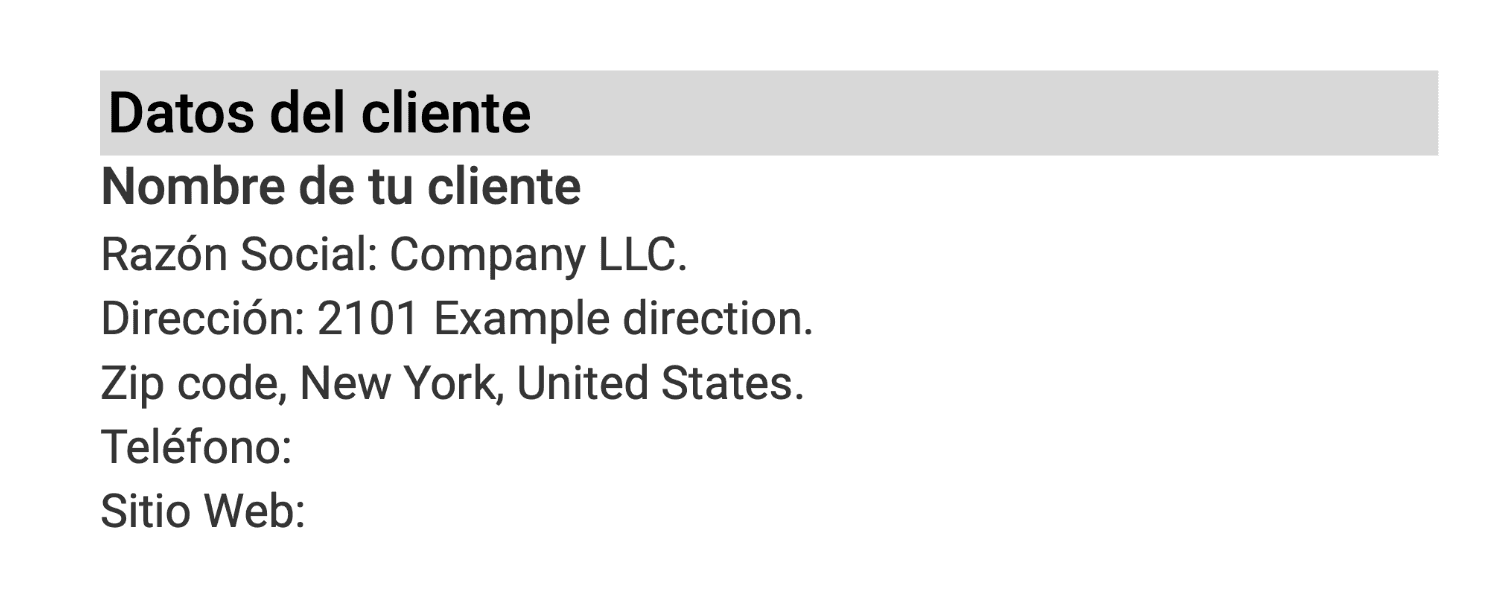
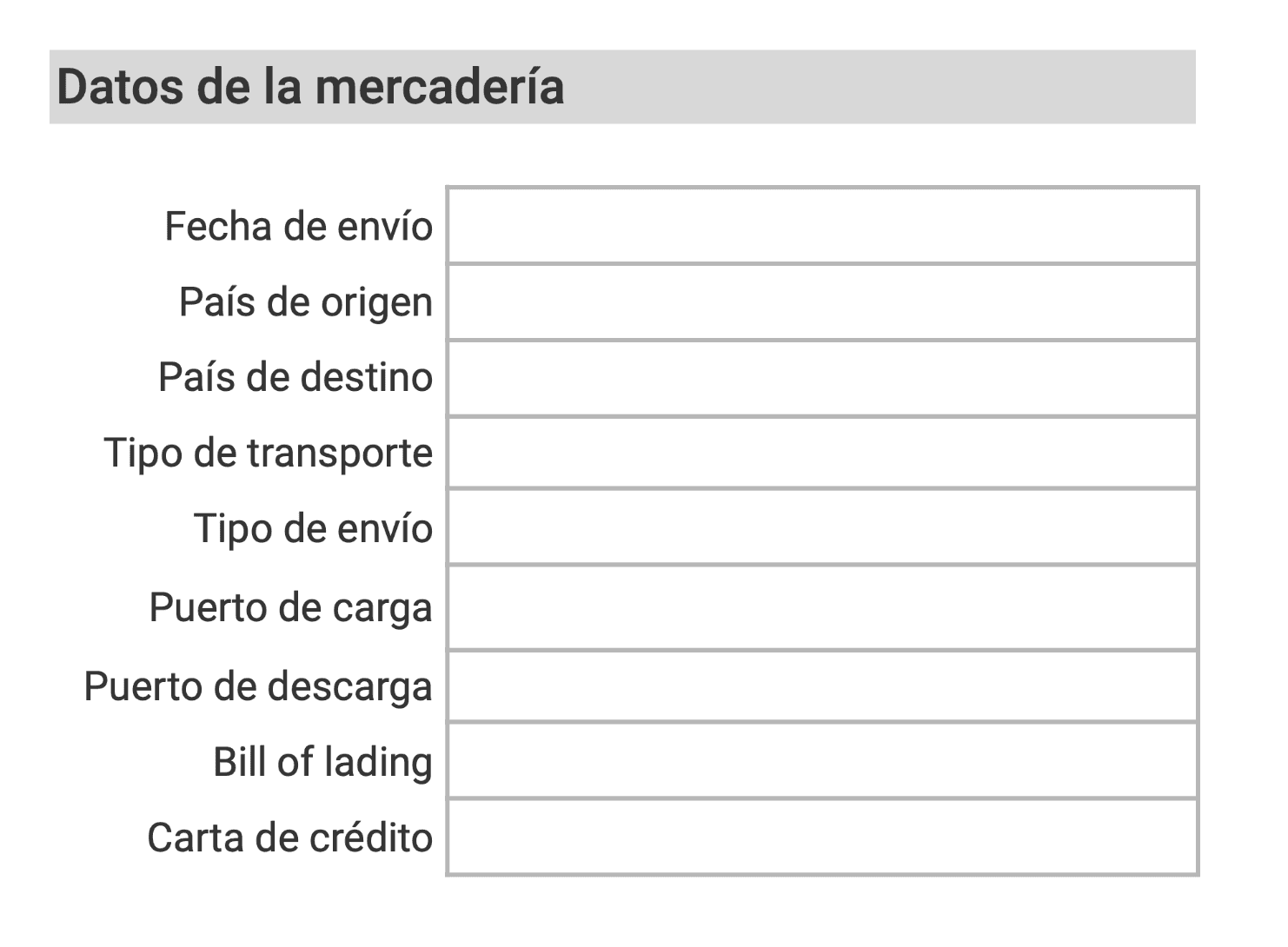
3. Order and goods data
Not all invoices include all the information about the purchase order, but it is usually very useful for the exporter’s organization. This makes it very easy to access the information about which order corresponds to which customer and payment.
The same applies to the goods data. It helps make order management easier because it allows direct access to that information. But it must be said that not all invoices necessarily include this information.
4. Price, duties and taxes
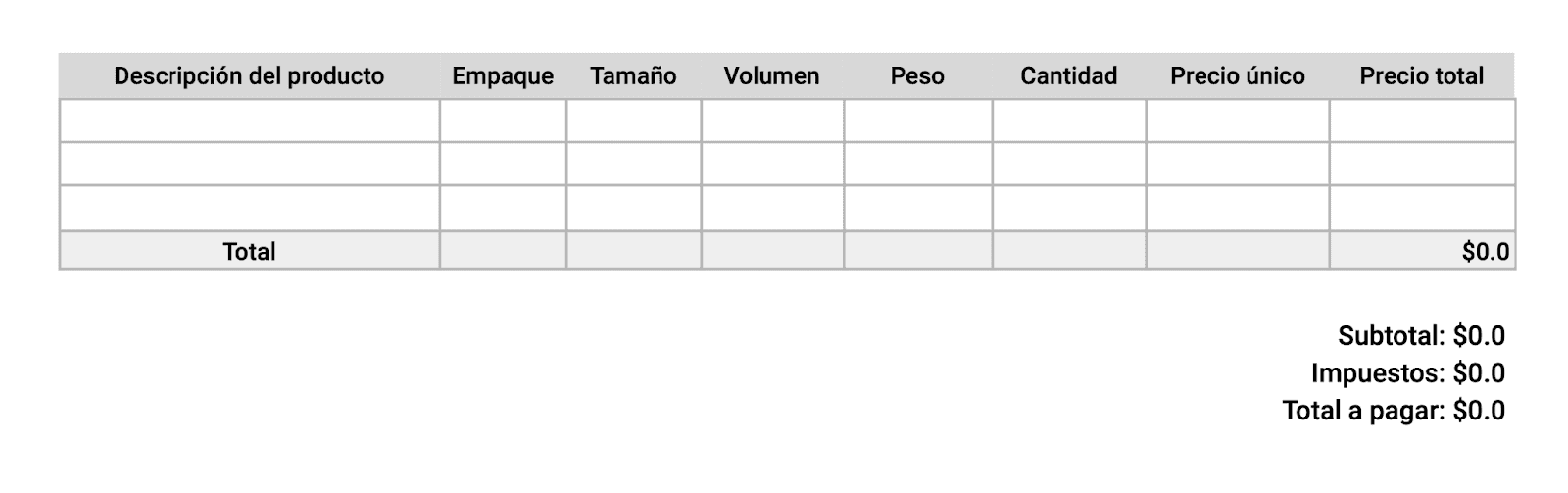
The order amount does have to be included. In general, a breakdown of how the order is composed in terms of quantities by unit weight is added.
Once a subtotal is obtained, the taxes to be paid and the total amount of the subtotal plus taxes are specified.
Do you think the export commercial invoice format could serve as a template for creating your invoices? Download it here.
Article written by
Peter D. Spradling | CEO

Operate between Latin America and the U.S. from a single place.
Global Account · FX · Payments · Credit